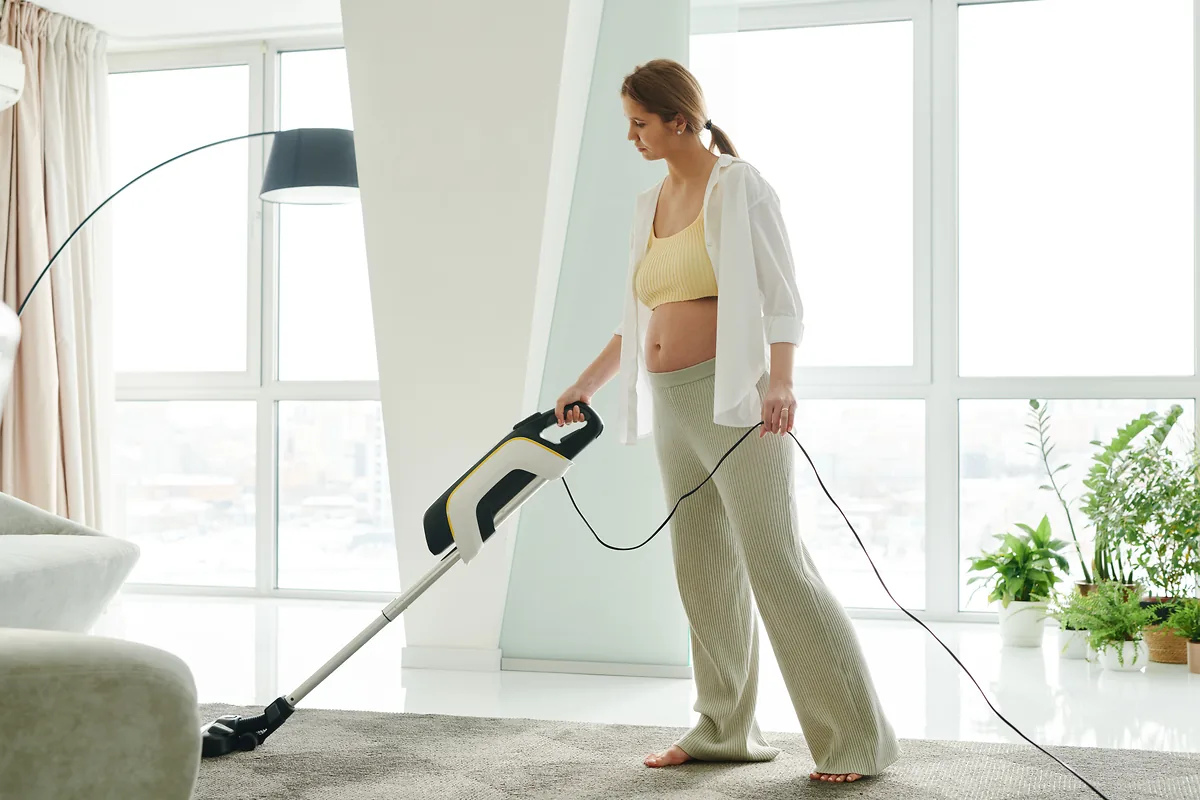
Robot Vacuums with Mop & Self-Emptying Station 2026: Expert Buyer's Guide
Por Equipo editorial Wasema
9 min de lectura
Divulgación: En calidad de Afiliado de Amazon, obtenemos ingresos por las compras adscritas que cumplen los requisitos aplicables. Si compras a través de nuestros enlaces, podemos recibir una pequeña comisión sin coste adicional para ti. La comisión no influye en nuestras valoraciones.
Robot Vacuums with Mop & Self-Emptying Station 2026: Expert Buyer's Guide
June 22, 2026
Do you spend 45 minutes every week emptying your robot vacuum’s dustbin, removing hair from its brush, and wiping water streaks from your floors? A robot vacuum with mopping and automatic self-emptying station promises to handle all these tasks—but does it really save time, or does it just shift the work to cleaning water tanks and wet filters? This guide analyzes which features actually work in real homes and when a hybrid robot creates more maintenance than it solves.
7.2/10
Editorial Rating: 7.2 / 10 for homes with mixed flooring and moderate budgets. Ratings vary based on floor type, home size, and your tolerance for weekly maintenance.
Key Takeaways
- Real Time Savings: Reduces manual emptying from twice a week to once a month, but adds 15–20 minutes weekly for cleaning water tanks and checking mop functions.
- Flooring Matters: Works well on tile and vinyl; water pools on carpets and can cause mold in tanks. Check your flooring before buying.
- Budget vs. Maintenance: Budget models on Amazon → require more hands-on care (small tanks, frequent roller cleaning); mid-range models on Amazon → offer the best balance; premium models on Amazon → cut maintenance but don’t eliminate it.
Prices are market references as of June 2026 and may vary by retailer and promotions. Check local availability and warranty before purchasing.
Which Robot Vacuum with Mop is Right for You?
Your choice should depend on your specific needs—not the most expensive model. This table helps you identify the features that truly matter for your home.
| Your Situation | Recommended Option | Why It Works | Skip This Option If... |
|---|---|---|---|
| Small apartment (<860 sq ft), mostly hard floors, limited budget | Budget option: Basic hybrid robot with mop | A small water tank (7–10 oz) is enough for small spaces. The self-emptying station isn’t essential if you run the robot 1–2 times weekly. Moderate suction (2,000–2,500 Pa) cleans tile and laminate easily. | You have thick carpets or need to run the robot more than 3 times weekly. The small tank must be refilled often if mopping frequently. |
| Medium home (860–1,600 sq ft), mixed flooring, used 2–3 times weekly | Mid-range: Hybrid robot with self-emptying station and adjustable mop | A 14–20 oz water tank covers a full cleaning cycle without refills. Suction of 2,500–3,500 Pa handles transitions between floors smoothly. The self-emptying station cuts manual maintenance to every 2–3 weeks. App connectivity allows efficient scheduling. | You need professional results on plush carpets or have pets with heavy shedding. Mid-range mopping may leave delicate floors damp. |
| Large home (>1,600 sq ft), varied flooring, sensitive to dust or allergies | Premium: Hybrid robot with smart station and advanced filtration | Water tanks ≥20 oz and suction ≥3,500 Pa cover large areas without compromise. HEPA filters with higher capacity trap more fine dust (not “99.9%,” but a noticeable reduction). The self-emptying station minimizes contact with collected dust. Moisture sensors adjust mopping automatically to floor type. | Your budget is very tight or your home has only hard floors with no carpets. Station maintenance requires monthly cleaning of the dustbin. |
| Household with thick carpets or frequent pet hair | Mid-range or premium with deactivatable mop | You need high suction (≥2,800 Pa) without mopping interference. The mop should fully deactivate or the robot should auto-detect carpets. A larger dustbin reduces frequent emptying. | You expect the robot to clean and mop carpets simultaneously without manual adjustments. Hybrid robots in mixed-floor homes require zone-specific setup. |
| People with limited mobility or those prioritizing time savings | Premium option with automatic self-emptying station and app control | The automatic station eliminates manual emptying every 1–2 weeks. Remote smartphone control reduces daily decisions. Alerts warn you of maintenance needs before they become urgent. | You live in a very small space where the station takes up too much room. The station needs a dedicated outlet and at least 24 inches of clear floor space. |
Important Note: No option works without maintenance. All models require cleaning brushes, checking filters, and occasional tank emptying. The difference lies in the frequency and manual effort, not in being “maintenance-free.”
Feature Matrix: Comparison by Buyer Profile
This table shows exactly where you can save or invest in a hybrid robot with mopping and self-emptying—based on what your household truly needs.
| Feature | Budget Option | Mid-Range | Premium Option |
|---|---|---|---|
| Suction Power | 2,000–3,000 Pa | 3,500–5,000 Pa | 5,500+ Pa |
| Water Tank Capacity (Mopping) | 7–10 oz (200–300 ml) | 10–17 oz (300–500 ml) | 17+ oz (500+ ml) |
| Dustbin Capacity (Station) | 0.5–0.8 gallons (2–3 liters) | 0.8–1 gallons (3–4 liters) | 1–1.3 gallons (4–5 liters) |
| Mopping Function | Fixed mop pad with basic vibration | Vibrating or moderately rotating mop pad | High-frequency rotating mop pad or dual-system |
| Autonomy Between Empties | 7–10 days (small apartment) | 10–14 days (medium home) | 14–21 days (large home) |
| Connectivity & Mapping | Basic mapping, app with limited features | Smart mapping, customizable zones, basic smart-home integration | Advanced mapping with room recognition, voice control, multi-system smart-home integration |
| Station Maintenance | Manual emptying of dustbin every 2–3 weeks; frequent filter cleaning | Manual emptying every 3–4 weeks; mid-life filters | Rare manual emptying; long-life filters; some models offer automatic mop pad cleaning |
| Noise Level | 65–70 dB (station noise noticeable) | 60–65 dB | 55–60 dB |
| Warranty & Customer Support | 1 year; limited support | 2 years; chat/email support | 2–3 years; priority support and included replacement parts |
Budget Option: Basic Hybrid Robot Vacuum with Mop
Looking to automate your home without breaking the bank? This entry-level hybrid robot vacuums and mops—but with noticeable trade-offs.
What Works
- Functional self-emptying station: Automatically empties the dustbin, reducing dust exposure. A real plus for sensitive respiratory systems.
- Basic cleaning on hard floors: Cold water mopping works on tile or vinyl for light maintenance, but won’t remove dried stains or grease.
- Autonomous cleaning cycles: Schedule daily or every-other-day runs—the robot keeps surfaces visibly dust-free between manual cleanings.
Compromises to Expect
- Tiny water tank: In apartments over 860 sq ft, you’ll need to refill during cleaning. The dustbin fills quickly, increasing maintenance.
- Weak suction on carpets: Short-pile carpets or rugs won’t get thoroughly cleaned. Pet owners or homes with large carpeted areas still need a traditional vacuum.
Approximate Price: Budget Option on Amazon →
Mid-Range: Balanced Hybrid Robot Vacuum with Mop
Get the best balance of performance and cost. The frustrating limitations of budget models disappear—while cutting your hands-on time significantly.
What Stands Out
- Tanks that last: The water tank covers 2–3 medium rooms without refills; the dust station handles multiple cleaning cycles. That means weeks of true autonomy.
- Automatic floor transition: The robot detects flooring types and boosts suction as needed. It reliably handles short-pile carpets and rugs on hard floors—but struggles on thick carpets.
- Smart mapping with zone control: The robot maps your home, avoiding problem areas like stairs or cables. You’ll intervene less often.
What to Know
- Surface-level mopping: Without hot water or pressure, it only removes light dirt. Dried stains or grease require pre-treatment. A monthly manual mop remains essential.
- Regular station care: Water filters, mop brushes, and sensors need cleaning every 2–3 weeks. Don’t expect a “set-and-forget” experience.
Approximate Price: Mid-Range on Amazon →
Premium Option: High-End Hybrid Robot Vacuum with Mop
For those who demand top-tier automation and are willing to pay for it, these robots can become your primary cleaning tool—not just a supplement.
What Justifies the Price
- True autonomy: Water and dust tanks cover 1,600+ sq ft without intervention. The self-emptying station enables 2–3 weeks of cleaning without maintenance. A major plus for allergy sufferers: significantly less dust exposure.
- Mopping with hot water and pressure control: Some premium models offer warm water and automatic floor-type adjustment. Visibly better results on stubborn tile stains—without pre-cleaning.
- Precision navigation: Improved sensors reliably detect thick carpets, stairs, and small objects. Clogs and manual rescues become a thing of the past.
Where Limits Remain
- Specialized maintenance: Complex systems require filter, water valve, and brush cleaning every 10–14 days. Skip it, and performance drops noticeably. This isn’t a “set-and-forget” device.
- Not a one-size solution: Even premium models don’t replace a traditional vacuum in homes with large pets or multiple plush carpets. Monthly deep cleaning remains necessary.
Approximate Price: Premium Option on Amazon →
Frequently Asked Questions
Does it really save time compared to a broom and a regular robot vacuum?
Yes—but with clear limits. You’ll skip daily hand-mopping, saving roughly 3–4 hours weekly in an 860–1,600 sq ft home with hard floors. In return, you gain maintenance time: emptying water tanks, cleaning mop brushes, removing tangled pet hair. If carpets cover over 20% of your space, the net time savings shrink because you’ll need more manual intervention.
What’s the real difference between a $200 model and an $800 one?
It’s not about cleaning quality—it’s about operational continuity. The pricier robot offers tanks 50–100% larger, stations less prone to clogs, and smarter mapping that leaves fewer zones untouched. The $200 model cleans just as well—but interrupts more often for refills and emptying. Both need maintenance; the difference is how often you intervene.
Do these robots work in 2026 without software updates?
Most do—but check the manufacturer’s support policy. Devices released in 2024–2025 typically get 2–3 years of active updates. After that, security patches stop. If your robot relies on a permanent internet connection—not just for the app, but for core functions—verify the manufacturer maintains servers for at least five years post-purchase. Otherwise, you risk failures from outdated algorithms.
Do I need to modify my floors for the robot to work?
No, but some limitations remain. The robot handles tile, laminate, terrazzo, and hardwood easily. Extreme unevenness (height differences over 0.4 inches) can cause water leaks or poor floor contact. Plush carpets over 0.6 inches thick often aren’t mopped. Test it in your home: many retailers offer 30-day returns. That’s the safest way to check compatibility without long-term commitment.
Does the self-emptying station really reduce allergies?
It reduces dust exposure during manual emptying, but doesn’t remove allergens from the air. The robot still stirs up particles while operating. For severe allergies, look for a station with a HEPA filter—but it’s not a replacement for air purifiers or regular bedding/laundry changes. Ensure the filter remains accessible and cleanable every 2–3 months; a clogged filter works against you.
When is a robot with mopping a bad choice?
Avoid it if over 40% of your space is carpeted, you have stairs without physical barriers, or your budget is under $250 (budget models often fail here). Also skip it if you’re away from home more than 12 hours daily and can’t intervene manually—for example, if the robot gets stuck or tanks run empty. In these cases, a regular robot vacuum plus a traditional mop is the more reliable solution.
Final Verdict: Is Now the Right Time to Switch?
Hybrid robots with mopping and self-emptying stations save real time weekly in homes with pets or allergies. In return, they demand monthly water tank checks and occasional adjustments based on flooring. They’re a smart investment if your goal is less manual maintenance—not if you want a truly maintenance-free solution.
Expected Price Range: Budget Option on Amazon → (entry-level) | Mid-Range on Amazon → (balanced capacity) | Premium Option on Amazon → (maximum autonomy)
Veredicto
Ready to reclaim your weekends? Choose the hybrid robot that matches your home’s needs—then enjoy cleaner floors with less effort. Click to compare top-rated models on Amazon today!
Ver precio en Amazon →
Análisis independiente
Sin reviews pagadas
Precio en tiempo real
Equipo editorial Wasema
El equipo editorial de Wasema analiza productos de consumo para el mercado europeo con criterios verificables: documentación pública, disponibilidad, compatibilidad, especificaciones y relación calidad-precio. Todos los análisis son editorialmente independientes. →